

Preventing injuries while using a slingshot
For those currently practicing with a slingshot or considering purchasing one, we will explain the correct way to hold and fire a slingshot to ensure safe use. Holding or firing an incorrect slingshot can be extremely dangerous, as the bullet could hit your hand and injure you. Please refer to this list of common injuries and causes that occur when using a slingshot, as well as how to prevent them.
Common injuries while using a slingshot
Even if you're having fun playing with a slingshot, getting injured can ruin the fun. Some slingshots can be dangerous and can even lead to blindness or broken bones, so it's very important to know the causes and take precautions to prevent serious injuries. So, what kind of accidents and injuries can occur while using a slingshot?
- Ricochet injury
- Hand Slap
- The ball hits the hand
These are the most common injuries that occur when using a slingshot. These injuries can be avoided with the right knowledge, so let's take a look at the causes and countermeasures.
Causes and solutions for bullet ricochets
There are two ways that a bullet can bounce: when it hits something hard, or when it hits the slingshot itself. In the first case, when a bullet bounces off a hard object, the solution is to simply not fire the slingshot if there is a hard object in the direction of the shot that could cause the bullet to bounce. Most common cases involve a bullet bouncing off an obstacle like bamboo or wood, or when there is a stone below the point of impact, causing the bullet to hit lower than the target, bounce off the ground, and return to the slingshot owner.
It's fine if it hits your body, but if it flies towards your eyes, it can be very dangerous and can cause blindness. Even if you're confident, try to avoid shooting through obstacles as much as possible.
The second is when the ball hits the slingshot body and ricochets, but this is caused by the same thing as when the ball hits your hand, so we will discuss this later.
What is a hand slap?
A hand slap is the phenomenon where the rubber band of a slingshot hits your hand with force after shooting the ball. Many of us have probably tried snapping our arms with a rubber band as children by pulling it. The pain of a hand slap is exactly like that, and while it's not enough to be considered an injury, it is extremely painful, so it's best to avoid it.
The cause of hand slap is an imbalance in the weight of the rubber and the ball. The mechanism of a slingshot is that you pull the rubber, store kinetic energy in the rubber, and when you release the rubber, release that energy and launch the ball. However, hand slap occurs when the rubber stores far more kinetic energy than is required to launch the ball. Therefore, to avoid this phenomenon, you must make sure that the thickness, width, and length of the rubber are appropriate for the weight of the ball. See the diagram below.

Why does a slingshot ball hit your hand?
You want to prevent the slingshot bullet from straying from its straight flight, hitting the fork frame, and bouncing off, or hitting the hand holding the bow. We have already explained the key points of aiming and posture, but the protective measures described in this article assume that you have mastered the posture of "stretching the rubber band perpendicular to the slingshot."
There are two main reasons why a shot goes wrong. The following two grips and shooting positions are not complicated, but you should definitely correct them if you have any of these problems:
Countermeasure 1 - How to hold the device and the angle of your hand
When using a Y-shaped slingshot, the way you hold it is extremely important to ensure the ball flies straight. Many people hold their slingshot like this:
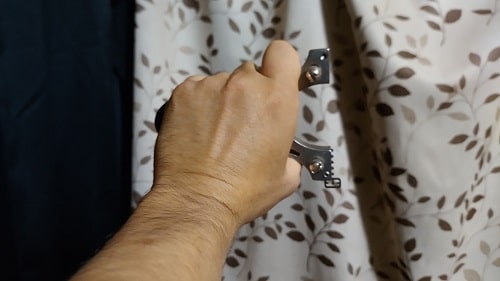
This grip, called a pinch grip, allows you to apply force and is very easy to hold, but it can be dangerous. It's not a problem with a weak pull, but if you hold it this way and pull a strong pull and fire the ball, the moment the load on your wrist from the pull is released, your wrist will bend due to the recoil, preventing the pull from firing the ball at a right angle to the fork. As a result, the ball could hit your hand or the fork, potentially causing injury.
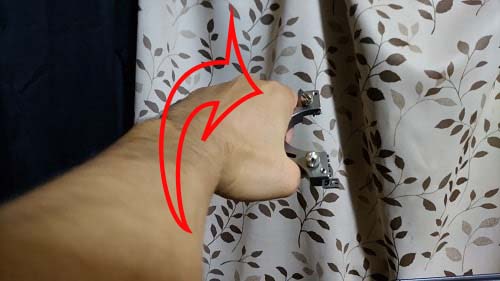
To prevent your wrist from turning over as shown in the photo above, place your thumb on one of the forks as if supporting it, and use that as a fulcrum to support the slingshot, which will help prevent a missed shot. This grip is called a thumb grip.

Holding it this way prevents your wrist from turning due to recoil, and allows you to keep the slingshot parallel to you when firing, preventing the ball from hitting your hand. However, some people find that a pinch grip is more accurate, so you don't necessarily have to hold it with a thumb grip. The important thing is to hold it in a way that feels comfortable to you.
Next, we will explain the causes of missed shots caused by how you hold the bullet holder (pouch) and how to deal with them.
If you are a beginner player who finds a pinch grip more comfortable and easier to use than a thumb grip, but is concerned about injury due to poor posture, our Dragon Tooth Terminator and Clip- on Dojigiri are two excellent options.
Countermeasure 2 - How to hold the slingshot pouch
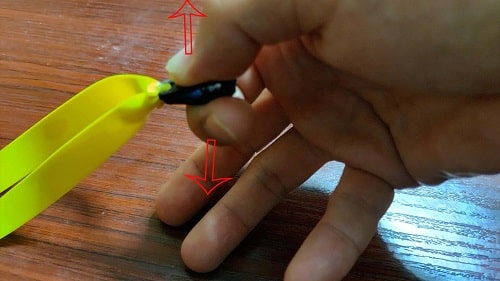
The second cause of a missed shot is when your fingers interfere with the rubber band when you release the ball, changing its trajectory. A rubber band with a strong pull requires strong finger strength, but holding the ball like you're clenching your hand, as shown in the photo below, can interfere with the rubber band's trajectory.
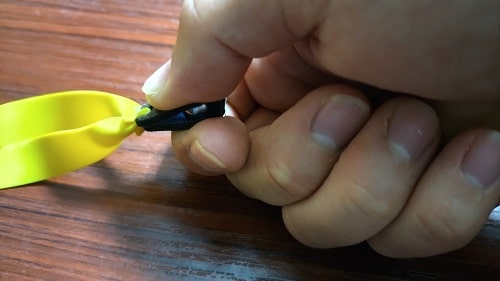
If you hold the gun like this, you will have to release your thumb to fire the ball, which will cause the rubber band to catch on your remaining index finger and cause the ball to be fired, resulting in an unstable trajectory.
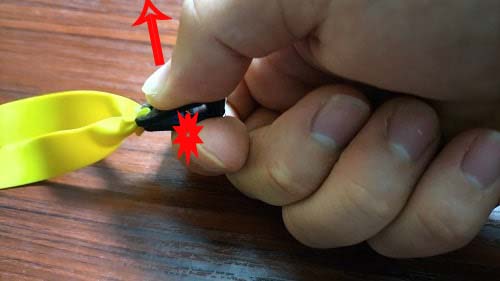
To release the bullet catcher without interfering with the rubber's trajectory, hold the ball with your hand open so that your thumb and index finger can be released at the same time, as shown in the photo below.
summary
The most common injury caused by a slingshot is a ricochet, but we've explained how to prevent the ball from hitting the fork or your hand. Learning the correct shooting technique will improve your accuracy, so why not take this opportunity to correct your technique? If you want to learn more about slingshots, check out our slingshot basics page. All the information is summarized here.